









-
E-Learning and Mobile Learning Training Manual for Colleges and Universities: Transforming Learning
Jasmine R. Renner
This manual provides detailed guidance on creating, designing and developing e-learning and m-learning courses, materials and resources for instructors, faculty, staff, trainers and instructional designers who are new to e-learning design at colleges and universities, especially in Africa and in developing nations. It provides basic concepts and information on the processes and resources involved in e-learning development, and a step by step systematic guide on how to design and develop e-learning and m-learning courses and resources in universities and colleges. The information in this manual is based on consolidated instructional design models and learning theories and incorporates the designer’s experience in delivering e-learning and m-learning courses in development contexts.
-
E-Learning Training Manual: Best Practices and Quality Assurance For Developing and Creating E-learning Courses in Colleges and Universities
Jasmine R. Renner
This training manual serves as a valuable tool to enhance instructional redesign and curriculum development of face-to-face (F2F) courses, materials and platforms into e-learning and mobile learning for all universities and colleges in the continent of Africa. It is designed for aspiring e-learning and mobile learning course developers who are desirous of developing, implementing and sustaining e-learning and m-learning platforms to promote teaching, learning, service and community.
-
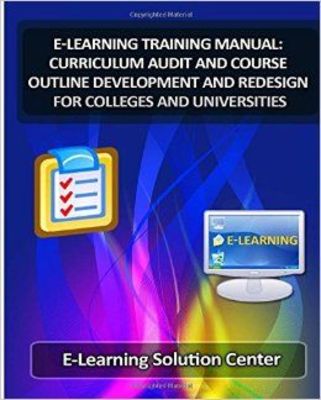
E-Learning Training Manual: Curriculum Audit and Course Outline Development and Redesign for Colleges and Universities
Jasmine R. Renner
Dedication -- Acknowledgments -- About the manual -- Getting started -- A world on curriculum audit and redesign -- Curriculum audit : the process -- Assessment -- What is needs analysis -- How it aids design and planning -- Addressing stakeholders needs -- Involving students -- What should be considered -- Using model and templates -- SWOT -- Profiling -- Curriculum redesign -- Matching learning methods to needs -- Program and course redesign checklist -- References and other resources -- Appendices 1 -- Appendices 2 -- About the author -- About the E-Learning Solutions Center -- About our services -- About our products -- Thank you.
This training manual serves as a valuable tool to enhance curriculum audit, instructional redesign, and the development of face-to-face (F2F) courses and materials into e-learning and mobile learning for colleges and universities. It is designed for aspiring e-learning and mobile learning course developers who are desirous of developing, implementing and sustaining e-learning and m-learning platforms to promote teaching, learning, service and community.
-
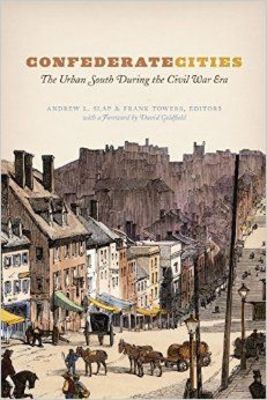
Confederate Cities: The Urban South during the Civil War Era
Andrew L. Slap and Frank Towers
When we talk about the Civil War, we often describe it in terms of battles that took place in small towns or in the countryside: Antietam, Gettysburg, Bull Run, and, most tellingly, the Battle of the Wilderness. One reason this picture has persisted is that few urban historians have studied the war, even though cities hosted, enabled, and shaped Southern society as much as they did in the North. Confederate Cities, edited by Andrew L. Slap and Frank Towers, shifts the focus from the agrarian economy that undergirded the South to the cities that served as its political and administrative hubs. The contributors use the lens of the city to examine now-familiar Civil War–era themes, including the scope of the war, secession, gender, emancipation, and war’s destruction. This more integrative approach dramatically revises our understanding of slavery’s relationship to capitalist economics and cultural modernity. By enabling a more holistic reading of the South, the book speaks to contemporary Civil War scholars and students alike—not least in providing fresh perspectives on a well-studied war.
-
American Constitutional Law, Volume I and II: Civil Rights and Liberties
Otis H. Stephens, Jr.; John M. Scheb, II; and Colin Glennon
AMERICAN CONSTITUTIONAL LAW, Volumes I and II, combines cases, decisions, and authorial commentary to maximize your learning and understanding in this course. These comprehensive volumes cover the entire range of topics in constitutional law. Volume I examines the institutional aspects of constitutional law; Volume II deals with civil rights and liberties. Each of the chapters includes an introductory essay providing the legal, historical, political, and cultural context of Supreme Court jurisprudence in a particular area of constitutional interpretation. Each chapter also contains several boxed features (labeled "Case in Point" and "Sidebar") to provide additional perspective and context for the set of edited decisions from the United States Supreme Court cases that follow. In selecting, editing, and updating the materials, the authors emphasize recent trends in major areas of constitutional interpretation, as well as many landmark decisions, some of which retain importance as precedents while others illustrate the transient nature of constitutional interpretation. Because the book provides a good balance of decisions and authorial commentary, this text appeals to instructors of law as well as instructors of political science.
-
Introduction to Criminal Justice
Lawrence F. Travis and Bradley D. Edwards
This student-friendly introductory text describes the criminal justice process―outlining the decisions, practices, people, and issues involved. It provides a solid introduction to the mechanisms of the criminal justice system, with balanced coverage of the issues presented by each facet of the process, including a thorough review of practices and controversies in law enforcement, the criminal courts, and corrections.
-
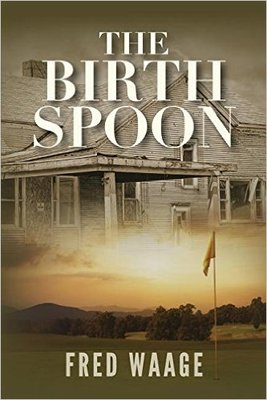
The Birth Spoon
Fred Waage
This mystery is set in the early 1980s and based on actual events. A high-school student unearths dark and deadly secrets of his Appalachian community. The explosive consequences forever mark his own life, his family's, and his town's.
-

This Mortal Earth: A Year of Beginnings and Ceasings
Fred Waage
The poems in this collection were written one-a-day, during the course of the author's sixty-seventh year. They seek to express an ecological awareness, the "intense consciousness of land" (Aldo Leopold), a consciousness of the Earth's land and of that essence that composes the writer's being.
-
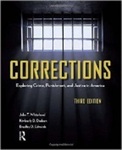
Corrections: Exploring Crime, Punishment, and Justice in America
John T. Whitehead, Kimberly D. Dodson, and Bradley D. Edwards
Corrections: Exploring Crime, Punishment, and Justice in America provides a thorough introduction to the topic of corrections in America. In addition to providing complete coverage of the history and structure of corrections, it offers a balanced account of the issues facing the field so that readers can arrive at informed opinions regarding the process and current state of corrections in America. The 3e introduces new content and fully updated information on America’s correctional system in a lively, colorful, readable textbook. Both instructors and students benefit from the inclusion of pedagogical tools and visual elements that help clarify the material.
-
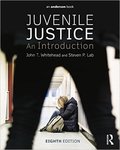
Juvenile Justice: An Introduction
John T. Whitehead and Steven P. Lab
Juvenile Justice: An Introduction, 8th edition, presents a comprehensive picture of juvenile offending, delinquency theories, and how juvenile justice actors and agencies react to delinquency. It covers the history and development of the juvenile justice system and the unique issues related to juveniles, offering evidence-based suggestions for successful interventions and treatment and examining the new balance model of juvenile court.
This new edition not only includes the latest available statistics on juvenile crime and victimization, drug use, court processing, and corrections, but provides insightful analysis of recent developments, such as those related to the use of probation supervision fees; responses to gangs and cyber bullying; implementing the deterrence model (Project Hope); the possible impact of drug legalization; the school-to-prison pipeline; the extent of victimization and mental illness in institutions; and implications of major court decisions regarding juveniles, such as Life Without Parole (LWOP) for juveniles.
Each chapter enhances student understanding with Key Terms, a "What You Need to Know" section highlighting important points, and Discussion Questions. Links at key points in the text show students where they can go to get the latest information, and a comprehensive glossary aids comprehension.
Printing is not supported at the primary Gallery Thumbnail page. Please first navigate to a specific Image before printing.